
Lowberries
The most important dos and don'ts for growing raspberry plants

The weather in 2025 has been quite challenging for gardeners so far. A mild winter gave way to a cool spring, followed by a spectacular start to summer with heat and weeks of drought. No sooner had we got used to it than daily rain showers and temperatures that did little to bring out the summer feeling arrived – only to jump back up to 30 degrees again.
Such capricious weather makes plant management in raspberry production a real challenge. That's why it's worth keeping an eye on the...
Ruby Best® & Ruby Fall® – The perfect raspberry pairing

There's something happening in the compact raspberry segment: two remarkable new additions are setting new standards. Discover Lowberry® Ruby Best® and Lowberry® Ruby Fall® – two varieties that impress not only with their exceptional growth, but above all with their perfectly coordinated ripening behaviour. Together, they provide continuous harvesting pleasure from early summer until well into autumn.
Read moreBreeding progress – for what?
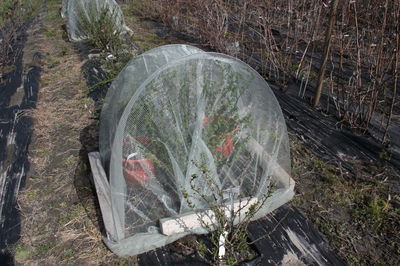
Why and for what does progress in breeding need to be made in plants for the home garden, especially in edible plants? Is there any advancement at all – or is it just less or more reproduction of the old, old wine being sold in new bottles? And if there are improvements, what are they focussed on and how can we sell them? These are the questions I would like to answer in this article, using raspberries as an example.
Read moreRaspberry breeding at Lubera – the reinvention of the raspberry for the garden
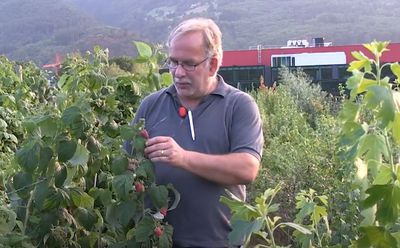
Raspberry breeding has been one of the largest breeding programmes at Lubera for over 20 years. Ultimately, only apple breeding is even older, which basically began when the company was founded in 1993. The first goal of raspberry breeding was simple and overdue: it was to replace the dominant Autumn Bliss raspberry with better varieties. To do this, we crossed Autumn Bliss with Tulameen together with Reto Neuweiler from the Wädenswil Research Station – this then resulted in the Autumn...
Read moreWhy black is the new colour of fruit! All about Cassissima®
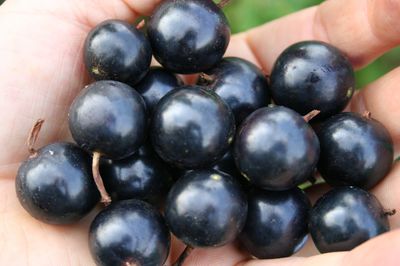
If you take a closer look at the fruit counters of the supermarkets nowadays, you will find blueberries and strawberries all year round, even red currants are now offered throughout most of the year. However, blackcurrants are hardly ever found, if at all, and there is no trace of jostaberries. The latest generations of these black fruits have the opportunity to end their current Cinderella existence and become more than just a niche within a niche...
Read moreRaspberry plants with yellow leaves – symptoms and causes
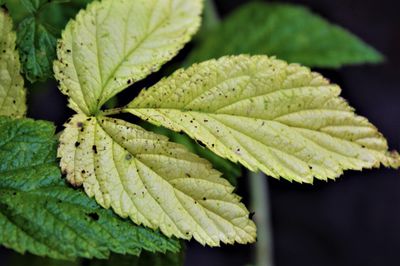
That raspberry plants get yellow leaves is basically not a question but a statement. And it is relatively unimportant whether it is at a hobby gardener's home, during the production of pot/container plants, in our variety garden or even at our breeding facility. But as diverse as the individual raspberry varieties are, so versatile are the causes of the yellow leaves. And there is not always a serious disease behind it; it can also be a completely natural physiological effect. In the following...
Read moreComplaint rates and sales opportunities for raspberry plants
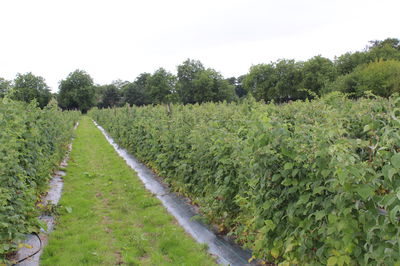
Every producer of raspberry plants knows this: there are complaints from end consumers and, based on these, also from retail outlets. Raspberries are among the plants for which a certain rate of complaints can be expected, even if one has completely fulfilled one's task as a young plant producer and of course as a plant producer. What is behind this phenomenon? When is the main complaint made, and could this not also be used as a sales argument? We have analysed and evaluated the complaints at...
Read moreLeftover plants from the production – what do I do with them?

In particular in these special days, when the trade and sale of plants in Germany and Europe is subject to considerable restrictions, some plant producers will probably be worried whether their already produced and ready-for-sale plant stocks can be delivered completely and if so, at what time this will happen. However, apart from the current crisis, it can always happen that plant stocks cannot be completely cleared. As gardeners, we are still very dependent on the weather, despite an...
Read moreThe exclusive Lubera Edibles assortment poster – all 'edible' young plants at a glance
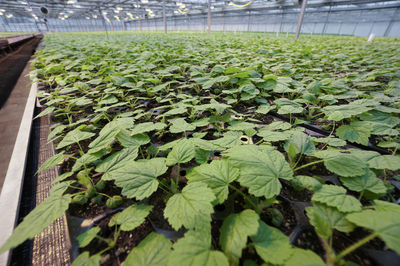
As in so many industries and areas of everyday life, the trend is moving towards more online-based advertising and paperless communication. However, at the moment, we do not want to do without print media entirely. Last autumn, for example, we were already able to present our current young plant catalogue for 2020. Many of you have already received the printed version and at the same time our young plant catalogue is also available at luberaedibles.com in the download area.
Read moreRaspberries and blackberries – how an assortment is put together
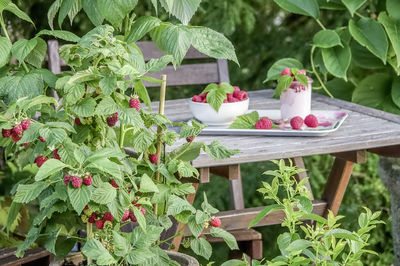
A few months ago, by analysing the strawberry sales figures of our sister company Lubera, we tried to give some indications of a standard distribution of strawberry types (white flowering, red flowering, June bearing and everbearing, etc.). We are testing the same again with raspberries and blackberries in order to give you an overview of the demand. The corresponding figures can then serve as a reference point for your own assortment planning, as they are based on real sales figures. Of course...
Read more