
Grower's book - News
The 2026 young plant Season – Key Dos and Don’ts

Not every growing season is the same as the previous year’s. Every year brings new challenges that may not have played a role, or only a minor one, in other years. Markus Kobelt once admitted that, even at Lubera’s two production sites, almost all the mistakes we describe below have been made at some point. Which is not to say that they should be repeated all too often.😉
Read moreChallenges in Organic Young Plant Production – A Review of the 2026 Season
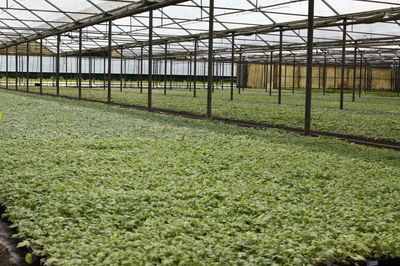
Every young plant season is different. Weather conditions, light levels and temperature influence plant growth in new ways every year. In organic young plant production in particular, this requires continuous adjustment of cultivation practices, irrigation, fertilisation and plant health management.
The 2026 season also brought new challenges. In this review, we highlight the experiences we have gained and the insights that can be drawn from them for pot and container plant production. This...
Read moreHow long do people keep buying plants?

Two gardeners meet at the end of May. One says: ‘The year’s over; now we can finally focus on production – and we’ll hardly have any more trouble with customers.’ The other gardener counters: ‘No, it’s only just beginning. We’ve got another six months to make up for the setbacks and problems of the spring.’ Which gardener is describing the situation correctly? And which approach is more productive and promising? We’re happy to discuss...
Read moreIn vitro propagation as a modern solution in young plant production
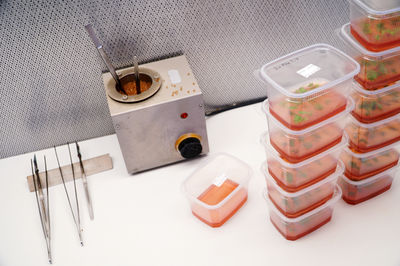
In vitro propagation is a regular topic of discussion in horticulture. Whilst it is an important component of reliable, high-quality young plant production for many businesses, others view it rather critically. Particularly in the organic sector and in European fruit growing, there are recurring reservations about this propagation method.
A closer look, however, reveals that in vitro propagation cannot be assessed in general terms. As with any propagation method, the results depend on the...
Read moreTackling root rot in raspberries
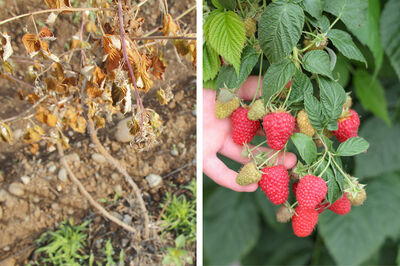
Root rot (Phytophthora rubi and possibly other Phytophthora species) poses the greatest threat when growing raspberries. Here at Lubera, we estimate that around 50–70 per cent of enquiries and complaints regarding raspberry problems are directly or indirectly related to root rot.
In raspberry breeding, it is primarily the James Hutton Institute in Scotland that has so far taken systematic steps to improve the resistance potential of new varieties. Since the majority of international raspberry...
Read moreWhere is the tanker heading? The Lubera breeding programme 2026-2030
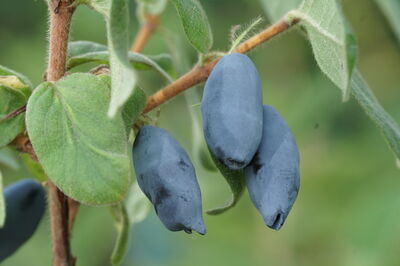
How do you steer a breeding programme? How do you decide what to do – and what not to do? Where do you continue to invest, and where do you cut back? And which of Lubera’s breeding initiatives are likely to cause the biggest stir over the next two to ten years?
Read moreCooltropics® winter-hardy passion fruit: Progress and outlook for breeding Passiflora incarnata

Winter-hardy passion fruit that reliably flowers and fruits even in Central Europe – for a long time, this was considered a horticultural dream. However, Passiflora incarnata, originally native to North American regions with a pronounced continental climate and adapted to very hot summers and cold winters, has precisely the robustness needed for successful cultivation in Central Europe. In the Lubera breeding programme, we are working to adapt this robust wild species to the conditions of...
Read moreLubera Chef®: The berry concept with substance, taste and aroma

The Lubera Chef® berry concept is being expanded: Autumn Chef® and Summer Chef® are getting a gourmet colleague in the form of the Twotimer Chef® variety, a double-bearing raspberry. And last but not least, the range is being expanded with a new blackberry variety, the super-sweet, large-fruited classic blackberry Blackstars Chef® – with a very long harvesting period.
Read moreGamechanger® - Making blackberry cultivation easy

Looking at the plants sold in the home gardening market, blackberries account for only about 15–20% of total Rubus sales. There are many reasons for this. The dominance of raspberries can also be explained by the simplification of cultivation due to the emergence of autumn raspberries. It is precisely this event, this Gamechanger®, that we are preparing for in 2027 with a new blackberry family.
Read moreThe dominance of raspberries and blackberries in the berry market

The dominance of Rubus berries (raspberries and blackberries) in the home gardening market is undisputed, but even greater than one might think. This has many implications for product range planning and marketing. Even though it is a good strategy to develop other types of berries and fruits and promote their sales, there is no way around raspberries and blackberries if we want to increase the overall market share of berry plants in home gardens. The only way to do this is through innovation...
Read more