
Vegetables
The vegetable breeding of Lubera

In addition to fruit and berries, we are expanding our vegetable range to become the third pillar of the Lubera Edibles young plant programme. This step is only logical: if our love for young plants literally goes through the stomach, then vegetables are naturally part of that. In addition, interest in growing your own high-quality vegetables in the garden or on the balcony is growing steadily – and this is exactly where our breeding work comes in.
Read moreVegetable young plants from Lubera Edibles – More than just edible: an assortment that inspires
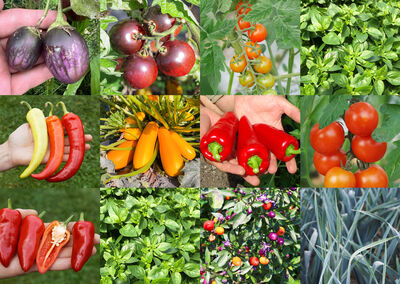
Do you only know us as specialists in softfruit young plants? Then we have a surprise for you. Because Lubera Edibles stands – as the name suggests – for everything that is delicious to eat. And that no longer includes just fruit and berries. With our innovative assortment of vegetable young plants, we are taking the next logical step – surprising, diverse and perfectly tailored to the home garden.
Read moreThe new market for premium vegetable plants
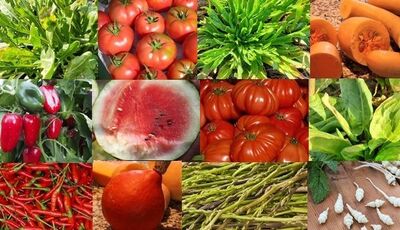
Lubera.com, the online store of our sister company, has been selling premium vegetable plants for several years. These are grown in 1.3-litre square pots, packaged with care and then reliably shipped to customers. The price for most plants is currently around EUR 5.50, with a price increase of 10% planned for 2025. But how big is this market? What are Lubera's experiences in general? We are not initially discussing which companies could produce these young plants and where they are sold, we...
Read moreVegetable breeding: breeding the outdoor tomato Open Sky Happy Black®
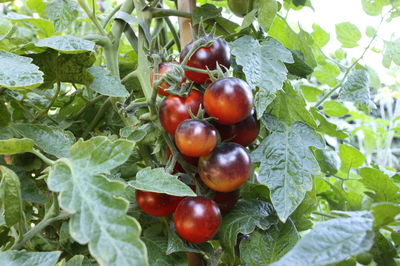
Tomatoes are a good example of how breeding vegetable varieties for the garden works. Breeding is actually easy, but it takes a lot of perseverance and above all continuity until you can finally bring a variety onto the market after six to ten years. In the following, I will briefly explain what is involved in our outdoor tomato breeding programme and how we specifically bred the Happy Black® variety.
Read moreHow successful are outdoor tomatoes on the market? – Sales test 2022

For some years now, when breeding new tomato varieties, we have concentrated on outdoor tomatoes that are largely resistant to blight and Alternaria. In discussions, we have heard time and again that the resistance argument is not important regarding tomatoes, that customers would focus on taste, on compact growth types or on diversity (colours, shapes, stripes). Sometimes even the suspicion was expressed that the building of tomato roofs, tomato houses and the like was just part of growing...
Read more

Open Sky® Tomatoes – The Resistant Tomato Young Plants for Outdoors
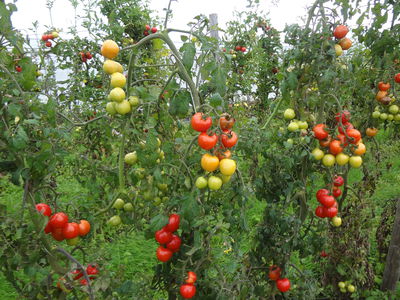
In recent years, the Lubera® breeding programmes have also been steadily expanded in the direction of vegetables. The first breeding programme is now bearing fruit, literally. We are pleased to present our Open Sky® outdoor tomatoes. Our Open Sky® tomatoes are designed to simplify cultivation in the home garden. By strictly selecting the healthiest plants, we have developed varieties that can be grown in the garden without further weather protection in Central Europe and they are also...
Read moreSugaroots® – Sweet Potato Young Plants for Central Europe
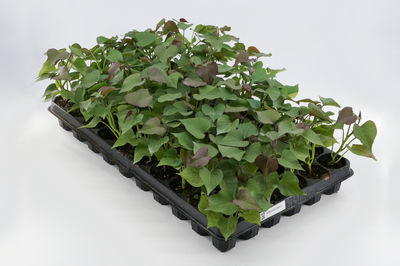
Hardly any vegetable is currently as trendy as the sweet potato. With an annual per capita consumption of around half a kilo, the sweet potato (Ipomoea batatas) is far from dominating the conventional potato (Solanum tuberosum), but the potential is there. In order to utilise this potential, at least in home gardens, we are launching the Sugaroots® sweet potato series for the 2022 spring season. These varieties were bred and selected by our partner company Lubera® in Switzerland.
Read moreSweet potato breeding at Lubera
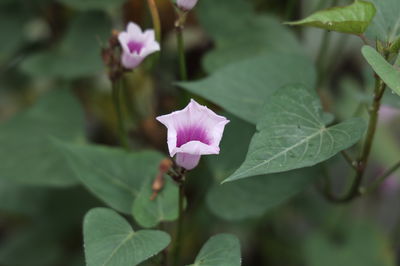
Sweet potatoes, Ipomoea batatas, are one of the most important crops internationally. In terms of yield, they rank number 15 among all crops, and among the root crops they are in 3rd place after potatoes and cassava. Their genetic origin and thus the place of greatest diversity is in subtropical to tropical Central America, but there are also genetic centres in South America (Peru) and in Polynesia, where the large tuberous roots stopped on their journey around the world. Exactly how sweet...
Read more