
Rhubarb
The vegetable breeding of Lubera

In addition to fruit and berries, we are expanding our vegetable range to become the third pillar of the Lubera Edibles young plant programme. This step is only logical: if our love for young plants literally goes through the stomach, then vegetables are naturally part of that. In addition, interest in growing your own high-quality vegetables in the garden or on the balcony is growing steadily – and this is exactly where our breeding work comes in.
Read moreThe new market for premium vegetable plants
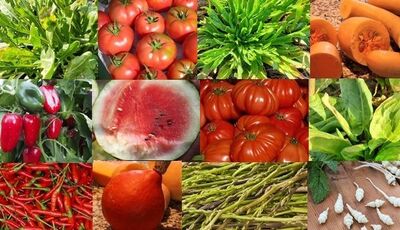
Lubera.com, the online store of our sister company, has been selling premium vegetable plants for several years. These are grown in 1.3-litre square pots, packaged with care and then reliably shipped to customers. The price for most plants is currently around EUR 5.50, with a price increase of 10% planned for 2025. But how big is this market? What are Lubera's experiences in general? We are not initially discussing which companies could produce these young plants and where they are sold, we...
Read moreFrom rhubarb to Barber® - how a boring plant becomes exciting again
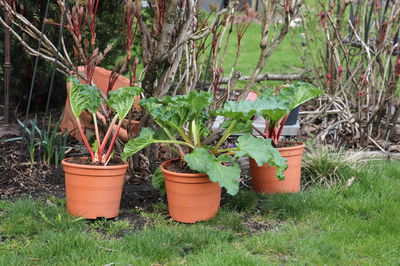
The future of rhubarb - with new variety families from Lubera Edibles
Once upon a time there was a plant that was also called the root of the barbarians because of its former use as a root medicinal plant: Rhubarb, Rheum rhabarbarum. And a rhubarb was a rhubarb, there were varieties but they seemed pretty interchangeable. How many rhubarb do you need in your assortment? One at the most!
Read moreWhat do rhubarb actually taste like?
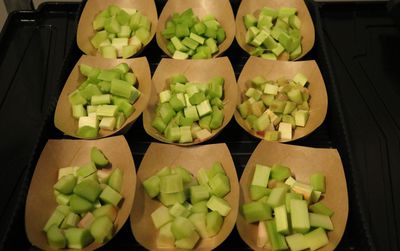
Frederik Vollert, Moritz Köhle and Maja Pfund from Lubera’s breeder team are currently taking over the Lubera kitchen at the end of April – to cook and taste rhubarb. This is a rather unusual picture: dozens of rhubarb bowls on the table, men and one woman standing around the rhubarb table discussing the finer points of rhubarb flavour. What is going on? The Lubera editorial team wanted to know more and asked the acid-minded rhubarb enthusiasts and rhubarb chef Frederik Vollert about...
Read moreEverVeg® – the advantages for hobby gardeners, for retailers and for producing vegetable plants
We use the term 'EverVeg®' to describe a wide range of different vegetable plants, all of which share the same characteristics: edible parts of the plant, perenniality and the ease of growing them in home gardens. Here we present this group of vegetables as a whole; we show the importance of Ever Veg® in the overall assortment and present the consumer trends that favour EverVeg®.
Read moreRoot power – a look into the future of rhubarb
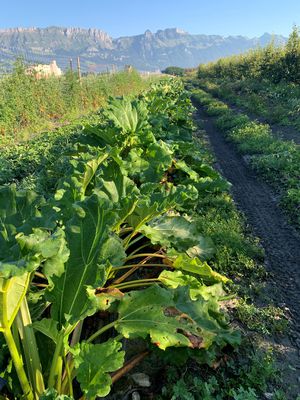
Looking into the future can be little more than looking into a crystal ball. What helps is to look back: rhubarb has a great past and history. There is a lot of future to be expected...not all rhubarb is the same – and a look at our candidate varieties from the Lubera® breeding programme shows what diversity even simple rhubarb is capable of.
Read moreThe exclusive Lubera Edibles assortment poster – all 'edible' young plants at a glance
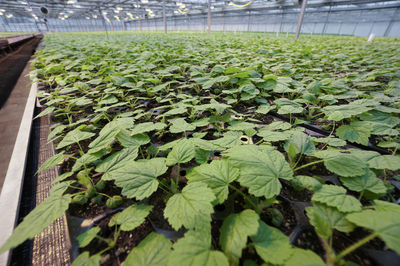
As in so many industries and areas of everyday life, the trend is moving towards more online-based advertising and paperless communication. However, at the moment, we do not want to do without print media entirely. Last autumn, for example, we were already able to present our current young plant catalogue for 2020. Many of you have already received the printed version and at the same time our young plant catalogue is also available at luberaedibles.com in the download area.
Read moreTomato and aubergine breeding at Lubera Edibles
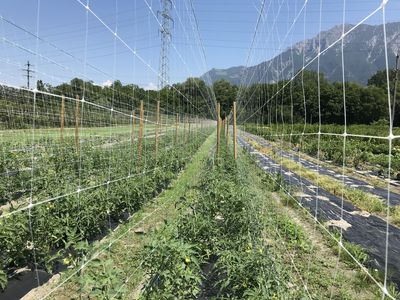
Tomatoes and aubergine young plants from Lubera Edibles®. We can already see the incredulous amazement in the eyes of many of our customers. And that's why we start early enough to explain what we do at Lubera Edibles vegetable-wise. Because one thing is certain: plant producers as well as young plant producers will have to position themselves more broadly and pragmatically in the future in order to resist the distortions of the market.
Read moreEstablishment of rhubarb for sterile micropropagation
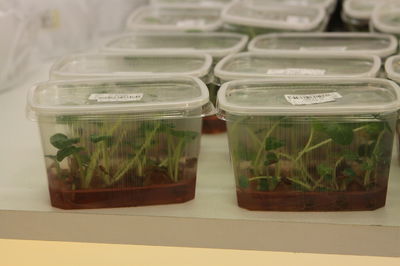
In order to be able to produce a large amount of qualitatively uniform young rhubarb plants in a short period of time regardless of weather conditions, the plants are micropropagated under controlled laboratory conditions in a sterile environment. Controlled laboratory conditions refer to abiotic factors such as light intensity, light quality, day length, temperature and humidity. Micropropagation is suitable for the mass production of genetically identical pathogen-free plants from selected...
Read moreAdvantages of Micro-Propagated Rhubarb
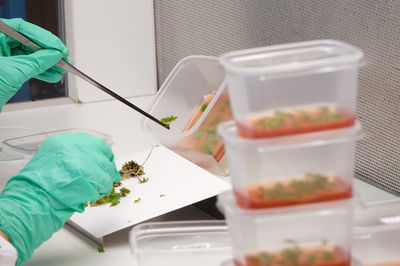
Markus Kobelt of Lubera Edibles, explains all about the advantages of micro-propagated rhubarb within the Lubera Edibles Range.
'Lubera Edibles' is the young plant division of Lubera, it provides a large selection of delicious fruit varieties to growers. The companies of Robert Mayer and Lubera have joined forces to develop the new plants at Lubera which are then coordinated with the product development and in-vitro propagation at Mayer.
Read more